Korigad (a.k.a Koraigad) is a part of a cluster of forts being located in the Maval - Lonavala region.
Early information about the fort is unavailable, but it can be assumed that it predates the Maratha reign. The fort is 3049 ft above sea level and has flat topography.
Apparently the fort was brought under his control by the maratha king Ch.Shivaji (17th cen) along with forts like Lohagad,Visapur,Tung,Tikona etc. Later it passed hands to the mughals only to be captured by Pant Sachiv in 1700 and was used as a prison. Koraigad later came under the British rule in the 19th century (14th March 1818) when Col. Prother of the British East India Company assailed the fort.
Korigad is situated around 35 kms from the hill station of Lonavala (64 kms from Pune city). One can take their vehicles right upto the base village of Peth Shahapur (which is in proximity to the Sahara Aamby valley city).
Being a hill station the weather is pleasant 24x7x365 (the best time to visit the place is undoubtedly the monsoons with all its greenery and waterfalls abounding).
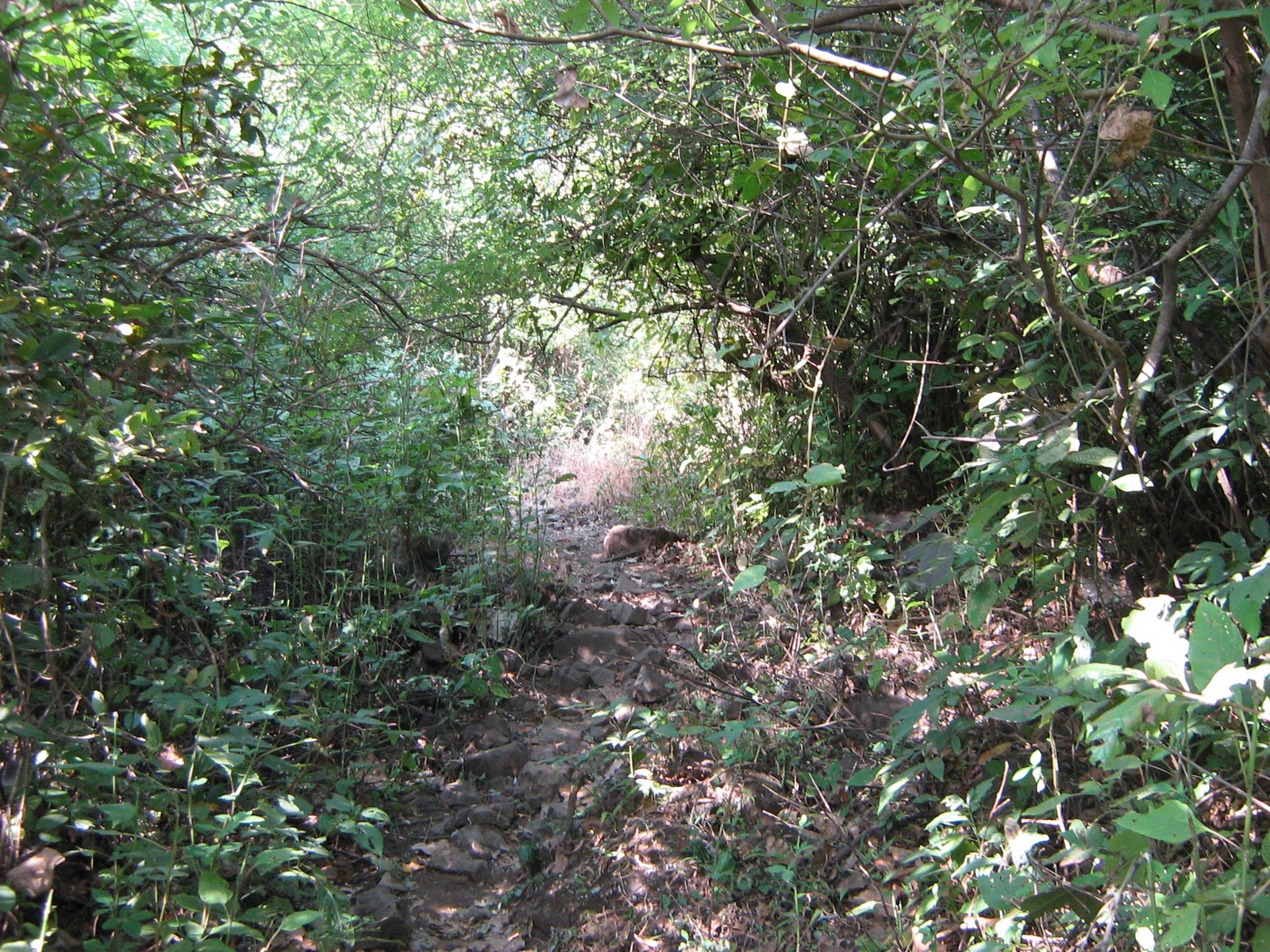
The road from Shahapur to the fort stairs is a little rough. One even needs to pass through a bushy pathway in order to access the fort. But the trek is safe enough (if we tread carefully keeping in mind its a forest area with a possibility of an odd snake slithering around).
The fort stairs are being renovated courtesy Sahara and it takes an hour or so to climb to the top.
Enroute one comes across a Ganesh temple with a cave alongside. The cave is uninhabitable being filled with muddy water.
After passing the temple a bastion of the fort comes in clear view and one soon come across the main entrance named the '
Ganesh darwaza'.
The fort walls/ramparts are still very much intact and a clearly defined parapet alongside the walls traces the periphery of the fort.
The fort itself is a flat table land.
There are two lakes on the fort and many ruined structures that could have once been the '
Sadar' (office) and the residences.
The fort also has many loose cannons.
The largest being named the
'Laxmi toff'.
One can relax at the Korai devi temple which is dedicated to the fort goddess Koraidevi. A 35 ft
deepamala and some old idols also adorn the temple.
One also gets a view of other forts in the vicinity like Tung,Tikona, Prabalgad,Morgad,Rajmachi etc.
Korigad is a relatively small fort and takes about and hour and two to see it in its entirety.
Misc photos:
Photos by Ambareesh Phadanvis:
Text and Photographs : Abhijit Rajadhyaksha (except the photos credited to Ambareesh Phadanvis).